PandiFi Loan Vault
Introduction#
In an ideal world, we would use public blockchains to create digital loans. By digital, we mean that the entire lifecycle of a loan - creation, distribution, market making, and collections - would exist on a single public blockchain. However, there are multiple reasons why this is impractical in the near term:
- Loan origination can entail hundreds or even thousands of data points, which is still prohibitively expensive to store on public blockchains like Ethereum
- While some companies claim to offer digital loans, they typically entail significant compromises to the key value drivers of blockchain technology: trustlessness and immutability. For example, they might utilize a blockchain in a way that is essentially the same as a SQL database. Or they might do a lot of data processing off chain and not fully disclose the details of their product.
- It's not clear that digital loan investors would have the same protections as a loan created using more traditional legal structures.
- The limiting factor for digital loans is regulations, not technology. While we could build a digital originator, it's kind of pointless unless consumer lending regulations accommodating the unique value proposition of public blockchains.
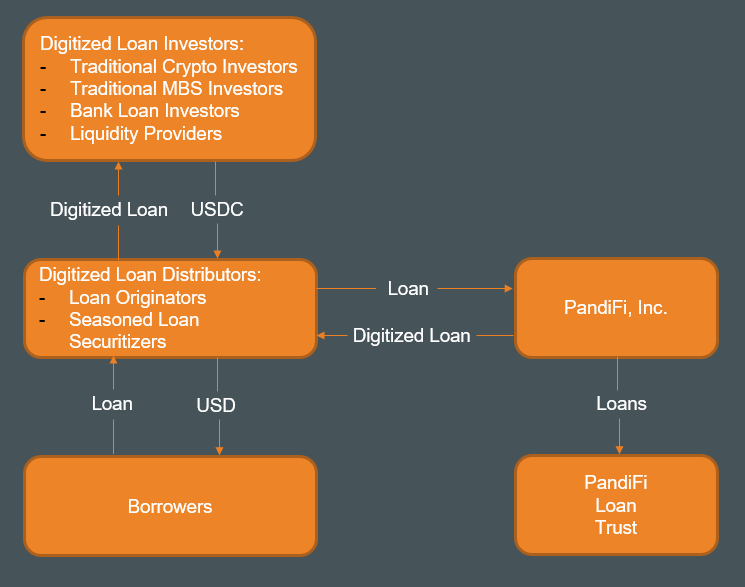
In contrast, PandiFi is focused on creating digitized loans rather than digital loans. Every loans on the PandiFi system is a traditional loan that is held in the PandiFi Loan Vault. In its most basic form, a loan seller would give PandiFi a traditional loan and PandiFi would give that distributor an Ethereum token1 representing that loan and its cash flows.